
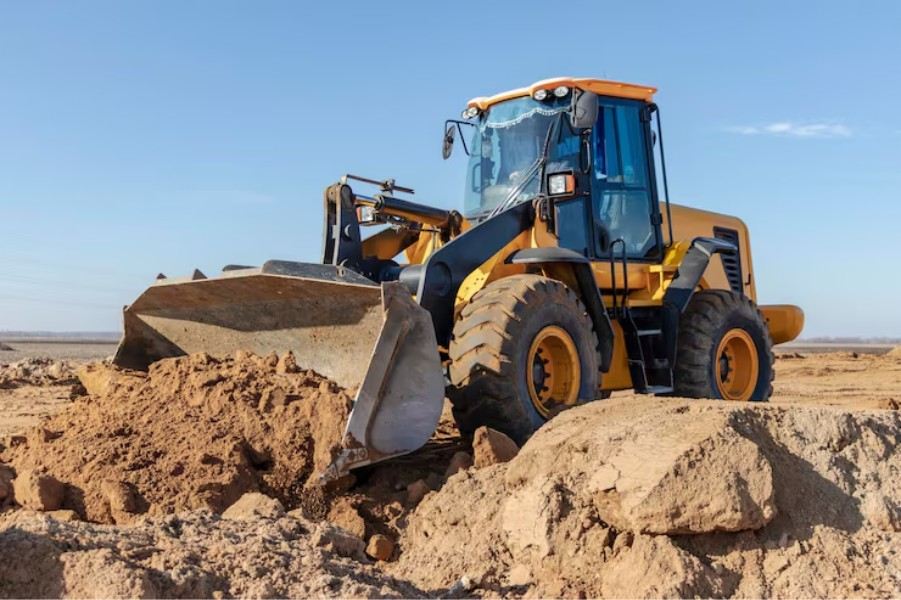
For construction contractors in Saudi Arabia, selecting the right spare parts is an important part of keeping heavy equipment available for work. When an excavator, loader, dozer, or other machine is taken out of service, the time required to identify and source the correct replacement component can affect maintenance schedules and project operations.
Procurement teams also need to consider more than the purchase price. Equipment make and model, part compatibility, operating conditions, availability, and supplier capability all influence whether a spare part is suitable for a particular application.
This is especially relevant for contractors managing different equipment brands and sourcing components for demanding construction environments. Understanding how to choose heavy equipment spare parts can help procurement teams make more informed purchasing decisions and avoid unnecessary delays.
What Contractors Should Consider Before Ordering Heavy Equipment Spare Parts
Start With the Exact Equipment and Part Requirement
The first step in sourcing machinery spare parts is identifying exactly what the equipment requires. Procurement teams should collect information such as the equipment make, model, serial number where applicable, existing part number, technical specifications, and intended application.
This information becomes particularly important when contractors operate mixed fleets. Two machines may perform similar functions but require different components based on their model, configuration, or operating system.
Rather than ordering from a general description, procurement teams should provide as much equipment information as possible to the supplier. Accurate details can make part identification more efficient and reduce the risk of receiving an unsuitable component.
Consider How and Where the Equipment Is Used
The operating environment should also be considered when selecting heavy equipment spare parts.
Construction equipment in Saudi Arabia can be exposed to demanding workloads, high temperatures, dust, and extended operating periods. Excavators, loaders, dozers, and other machines may also work in different applications, from excavation and earthmoving to material handling and infrastructure projects.
These factors can influence the type of replacement components required and their expected operating demands. Procurement teams should therefore consider the machine’s application and working environment alongside the basic part specifications.
How to Choose Heavy Equipment Spare Parts for Your Fleet
Verify Compatibility Before Comparing Prices
Price should not be the first factor considered when selecting a replacement part. The priority should be determining whether the component is suitable for the specific equipment.
Procurement teams should verify the part number, dimensions, specifications, and compatibility with the machine. When the original part number is unavailable or an alternative need to be considered, technical cross-referencing can help identify a suitable option.
This is particularly useful for contractors managing multiple equipment models. Confirming compatibility before placing an order can help prevent incorrect purchases, additional sourcing work, and avoidable equipment downtime.
Decide Between OEM and Aftermarket Spare Parts
Contractors may have access to both OEM and aftermarket spare-parts options. The choice should be based on the equipment requirement, compatibility, availability, application, and procurement objectives.
OEM parts are produced by or for the original equipment manufacturer, while aftermarket parts are manufactured by other companies for use as replacement components. An aftermarket option may be considered when contractors are evaluating available replacement solutions for their equipment.
Bin Shehab Company operates in the aftermarket heavy equipment spare-parts market. Its ATS Division provides aftermarket tools and solutions across several equipment and component categories.
For procurement teams, the important consideration is not simply whether a part is OEM or aftermarket. The component should be evaluated against the equipment’s requirements, technical specifications, suitability, availability, and overall value.
Select the Right Spare-Part Category
Heavy equipment spare parts cover many different systems, so identifying the specific component category can make procurement more precise.
Depending on the equipment and maintenance requirement, contractors may need:
- Internal parts
- Undercarriage components
- Ground Engaging Tools (GET)
- Powertrain components
- Hydraulic components
- Cooling and filtration components
- Electrical components
Bin Shehab’s ATS Division covers these areas within its aftermarket tools and solutions. This category-based approach is useful for procurement teams because the requirements for an undercarriage component, hydraulic part, filtration component, or powertrain component can be very different.
How Saudi Contractors Can Evaluate Spare Parts Suppliers
Look for Multi-Brand Equipment Knowledge
Many contractors operate fleets containing equipment from different manufacturers. This makes multi-brand knowledge an important consideration when evaluating heavy equipment components suppliers.
Bin Shehab’s aftermarket offering includes equipment and component requirements associated with brands such as Caterpillar, Komatsu, Volvo, Cummins, and Perkins.
For procurement teams, working with a supplier familiar with multiple brands can simplify the process of sourcing components for different machines. Instead of treating every equipment requirement as a separate sourcing exercise, contractors can work with a supplier that understands the requirements of different equipment and component systems.
Check Part Availability and Sourcing Capability
A suitable spare part is only useful when it can be sourced within the timeframe required by the project.
If a machine is already out of service, procurement teams may need to identify and source the replacement component quickly. Availability, ready stock, sourcing capability, and delivery arrangements can therefore be important factors when comparing suppliers.
Bin Shehab highlights ready stock, sourcing capabilities, and nationwide delivery as part of its aftermarket tools and solutions. For contractors operating across Saudi Arabia, these capabilities can be relevant when spare parts are required for ongoing equipment maintenance.
Consider Technical Support When Identifying Replacement Parts
Identifying a replacement component is not always straightforward. Contractors may have incomplete part information, older equipment, different machine configurations, or a requirement to find an alternative component.
Technical knowledge and part cross-referencing can help procurement teams work through these situations. A supplier that understands equipment applications and component requirements can help make the identification process more efficient.
For recurring procurement, this type of support can also help contractors build a more organised approach to sourcing commonly required machinery spare parts.
Why Spare Parts Availability Matters When Equipment Downtime Affects a Project
Calculate the Cost of Delayed Equipment
The cost of a spare part should be considered alongside the potential cost of equipment downtime.
When a machine remains unavailable, the impact can extend beyond the replacement component itself. Depending on the project, equipment downtime may affect planned work, operator scheduling, equipment utilisation, and maintenance timelines.
For this reason, procurement teams should consider total cost when comparing available parts. A purchasing decision based only on the lowest initial price may not represent the best option if the part has limited availability or does not meet the equipment’s requirements.
Plan Critical Spare Parts Before They Are Needed
Contractors can also improve procurement planning by identifying components that are frequently replaced or critical to equipment operation.
Maintenance records can help teams identify recurring parts and establish which components may require advance planning. Keeping accurate records of equipment models, part numbers, previous replacements, and quantities can make future purchasing decisions easier.
This approach is particularly relevant for contractors managing multiple machines or projects where equipment availability is closely connected to scheduled work.
A Practical Spare Parts Procurement Process for Construction Teams
Step 1 — Record the Equipment and Part Details
Step 2 — Confirm Compatibility and Available Options
Step 3 — Evaluate Quality, Availability and Total Cost
Step 4 — Work With a Supplier That Understands Your Equipment Requirements
Choosing a Heavy Equipment Spare Parts Supplier in Saudi Arabia
What Procurement Teams Should Look for in a Long-Term Supplier
When evaluating heavy equipment components suppliers, Saudi contractors can consider:
- Experience with the equipment brands used in their fleet
- Availability across relevant spare-parts categories
- Ability to identify and cross-reference parts
- Suitable OEM and aftermarket options where applicable
- Sourcing capabilities
- Stock and delivery capabilities
- Understanding of heavy equipment applications
- Ability to support recurring procurement requirements
These factors help procurement teams move beyond simply comparing prices and instead evaluate whether a supplier can support their actual equipment requirements.
How Bin Shehab Company Supports Heavy Equipment Spare Parts Requirements
Bin Shehab Company serves the Saudi Arabian market through its ATS Division, which provides aftermarket tools and solutions for heavy equipment requirements.
Its spare-parts offering covers categories including internal parts, undercarriage, Ground Engaging Tools, powertrain, hydraulics, cooling and filtration, and electrical components. The company’s offering also covers equipment and component requirements associated with brands including Caterpillar, Komatsu, Volvo, Cummins, and Perkins.
Bin Shehab highlights capabilities including ready stock, sourcing, technical cross-referencing, and nationwide delivery. These capabilities are relevant to Saudi contractors and procurement teams looking for replacement components across different equipment requirements.
For customers managing equipment fleets, the objective is to identify the right component for the machine, understand the available options, and source the required part according to the project’s maintenance and operational needs.
Conclusion
Choosing the right heavy equipment spare parts requires checking compatibility, equipment requirements, operating conditions, availability, and the right OEM or aftermarket option. For Saudi contractors, working with an experienced supplier can also help reduce procurement delays and equipment downtime.
Bin Shehab Company supplies OEM and aftermarket spare parts for various heavy equipment requirements across Saudi Arabia. Need help finding the right spare parts? Contact today to discuss your requirements.
FAQ
1. What should I check before buying heavy equipment spare parts?
Check the equipment model, part number, specifications, compatibility, application, and operating conditions.
2. Are OEM and aftermarket spare parts different?
Yes, OEM parts are supplied by or for the original equipment manufacturer, while aftermarket parts are produced by other manufacturers.
3. Why is part-number verification important?
It helps ensure that the replacement component is compatible with the specific equipment.
4. What types of heavy equipment spare parts are commonly required?
Common categories include undercarriage, hydraulics, powertrain, GET, filtration, cooling, electrical, and internal parts.
5. Why does spare-parts availability matter for construction projects?
Timely availability can help reduce equipment downtime and prevent unnecessary delays in project operations.


